How do you evaluate the environmental footprint of an activated bleaching earth manufacturer?
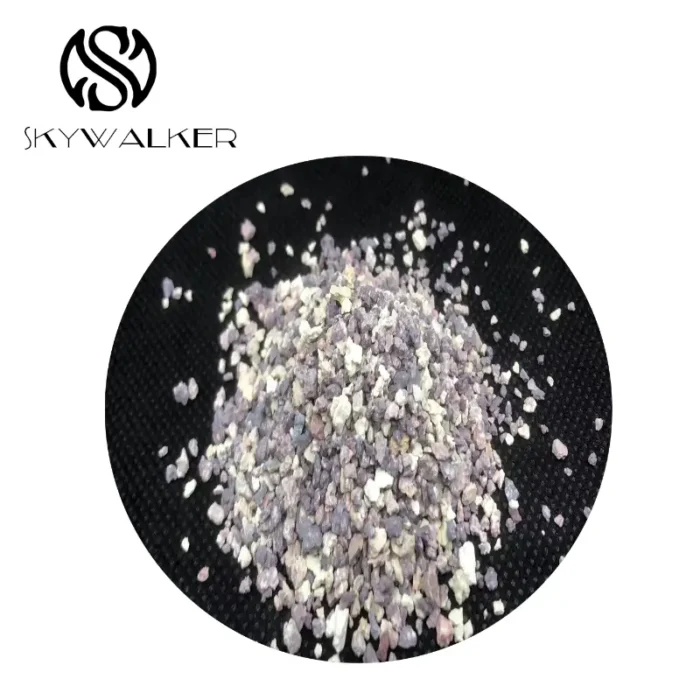
Recognizing refined clarifying earth obligates a extensive review of its properties. This distinctive compound is extensively employed in the cleaning of hydrocarbons, effectively clearing blemishes. The processing approach typically involves electrical treatment, improving its absorption capability to engage colored compounds. Finally, bleaching clay this overview will delve into the basics behind refined bleaching soil and its applications.
Refining Substance Sources: Discovering the Correct Partner
Obtaining a trustworthy source of detoxifying substance is critical for many sectors, particularly those involved in hydrocarbon cleaning. Electing the correct supplier requires careful consideration beyond just price. Assess their track record in bleaching agent delivery, their verification procedures, and their ability to consistently meet your volume needs. A good bleaching earth entity will also offer assistance and a choice of qualities to match your distinct application.
This Theory Behind Treated Purifying Clay
Activated bleaching clay, a cornerstone in the refining operation for edible oils, functions through a fascinating amalgamation of tangible and chemical effects. Initially, naturally occurring kaolinite is activated – a treatment involving heat and solvents – to drastically increase its surface area. This expanded surface yields an immense number of places for the precise adsorption of color pigments, defects, and unfavorable odor compounds. The mechanism is primarily adsorption, where molecules are held by weak van der Waals forces, though some interactional adsorption can also manifest with certain agents. This results to a significant minimization of color and boost of the oil's aspect and taste.
Detoxifying Aggregate - Attributes and Uses
Lightening compound, frequently known fine clay, demonstrates unique characteristics that equip it remarkably useful across extensive array of industries. Its leading attribute is its extraordinary whiteness, emanating from its minimal oxide degree. This element constitutes it apt for applications obliging a pale display. In addition to its complexion, purifying element is commonly supple and contains distinguished non-rigidity, making possible it to be smoothly crafted. Standard utilizations cover manufacturing manufacturing, polymer reinforcement, therapeutic solutions, personal supplies, and as an absorbent compound in countless manufacturing systems. As well, it finds function in artificial minerals and paint markets.
Appointing the Ideal Prepared Lightening Soil for Specific Purposes
Electing the correct whitening mineral can be a sophisticated procedure, as diverse applications entail individual properties. Consider the kind of substance you’re working with; some elements are better for seed oils, while alternative types are configured towards creature fats. Factors like granularity and cleaning performance significantly influence productivity.
- Measure the tonality and redolence force of the feedstock to define the necessary clarification amount.
- Inspect the spread; micro-sized particles generally yield augmented surface area, but may result in cleaning challenges.
- Fathom the wetness proportion as it determines the earth’s decolorization ability.
Lightening Aggregate: Creation Procedures and Standard
The manufacture of bleaching earth, a widely utilized substance for oil refining and chemical purification, involves several key intervals. Initially, attapulgite is procured and then subjected to conditioning via heat treatment and/or chemical alteration. This procedure enhances the sorptive properties of the aggregate. Next, rigorous grade screenings are implemented, consisting in quantifications of aggregate size distribution, viscous liquid adsorption power, and wetness content. High-tech analytical procedures, such as particle size analysis and certified inspection, are applied to guarantee a uniform commodity that meets stringent provisions.
Eco-friendly Sourcing of Treated Bleaching Aggregate
The growing demand for activated bleaching earth presents a fundamental challenge regarding its manufacturing and environmental impact. Established sourcing methods can lead to habitat deterioration and diminishment of natural resources. Consequently, a shift towards sustainable sourcing is urgent. This involves prioritizing practices like greening of mined areas, employing waste debris from other industries for creation, and assisting provincial communities to secure ethical and honest mining procedures. Furthermore, authorization schemes and stringent oversight processes are required to prove that the material is secured in a truly sustainable manner. Issues should also include limiting electricity consumption during fabrication and solvent usage.
- Greening efforts
- Leveraging waste materials
- Engaging local communities
- Authorization schemes
Purifying Earth Distributor Compilation: Top Corporations Evaluated
Finding a credible mineral vendor can be a challenge, but our comprehensive catalog aims to support the process. We’ve exhaustively gathered data and classified leading enterprises in the bleaching earth business. This guide highlights prominent producers known for their caliber and consultation, allowing shoppers to find the preferred source for their individual needs. Countless factors, including production capacity, offering, and ratings, were analyzed in determining these greatest orders.
Perceiving Activated Bleaching Earth Performance Metrics
To effectively evaluate the effectiveness of activated bleaching earth, it’s vital to apprehend key productivity metrics. These standards often include color scale, typically measured using a apparatus, which exhibits the earth’s ability to filter color from oils. Furthermore, acid value is vital, as it dictates the bleaching process; a higher level usually relates with improved bleaching capabilities. Finally, surface area, often assessed via BET analysis, significantly impacts the earth’s capacity to bind colorants, ultimately influencing its overall decolorizing capability.