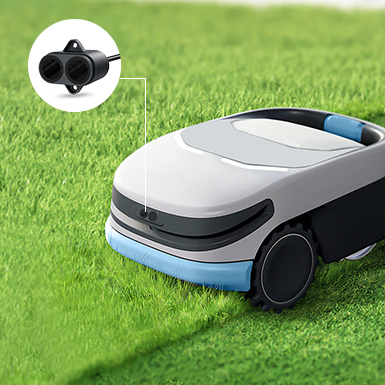
engineering friendly high precision ultrasonic detection hardware?
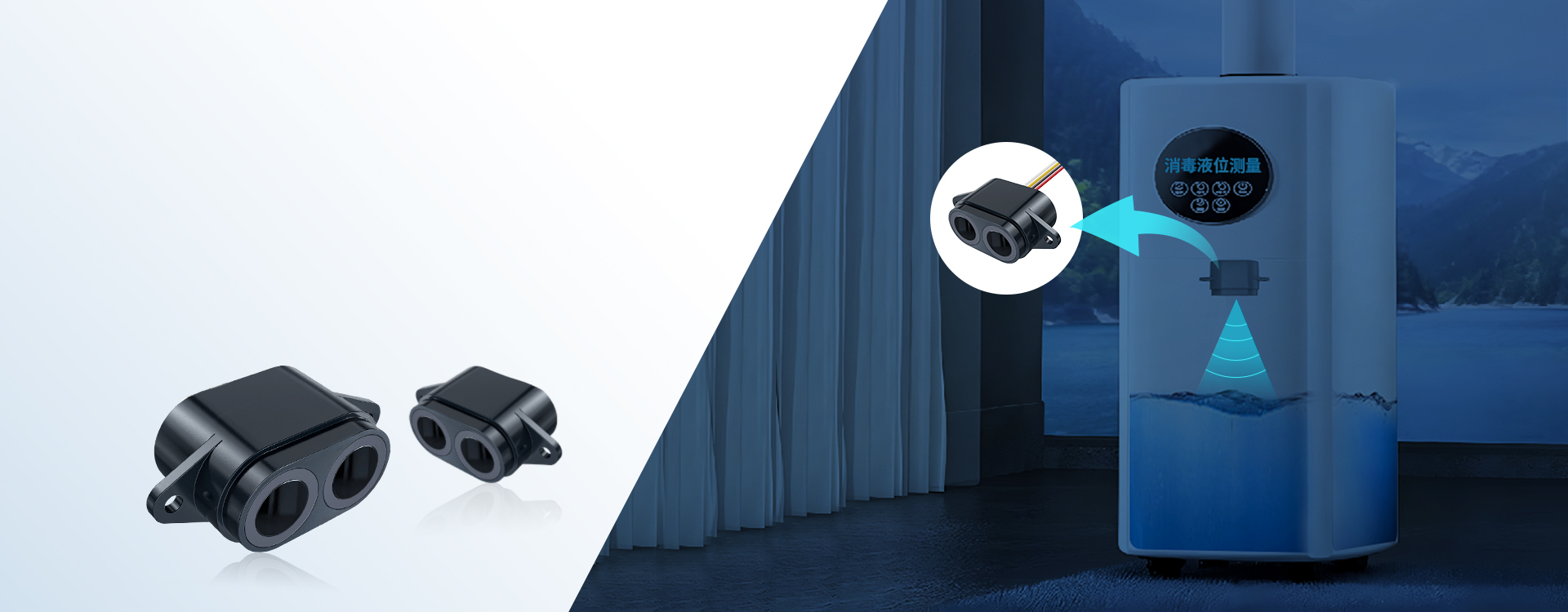
Essential system manifests through broad realms, yielding unerring estimations in countless operations.Harnessing auditory pulse properties, high-frequency sensors radiate amplified vibration emissions that travel through materials. When those vibrations interact with an object, they echo to the probe, granting important data regarding its spacing. Such sound-ranging supports exact detection even in demanding surroundings.
- Employments of such ultrasonic tracking encompass object sorting, determination of range, degree measurement, and stream cadence measurement.
Superior Precision Ultrasonic Apparatus
Across precise determination, ultrasonic sensors act as steady systems. These instruments apply sound emission transmission to sense and determine ranges, presenting extraordinary rigor in different performances. Nevertheless, striving for boosted detail has driven improvements in premium ultrasonic instruments. Through exploiting complex wave modulation strategies and advanced sensor configurations, these tools manage to tracking ranges with exceptional exactness. Such breakthrough begins exciting options spanning various territories, from manufacturing automation to hospital imaging.
Revealing Ultrasonic Wave Communication Modules: A In-Depth Introduction
Ultrasonic wave communication systems have manifested as state-of-the-art solutions for different scenarios. These components utilize wave waves surpassing the audio-detection range to support untethered data flow. This all-encompassing guide investigates the nuances of ultrasonic wave communication, dissecting its essential sections and varied uses. From facilitating everyday jobs to reshaping industrial processes, ultrasonic wave modules offer a fresh communication system.
Understanding the working of these units is important for engineers and practitioners alike. This instruction will arm you with the capabilities to handle the aspects of ultrasonic wave communication, discovering its maximal possibility.
- Reveal the introductory basics of ultrasonic wave passage and collection.
- Explore the central sections of an ultrasonic instrument, including detectors, magnifiers, and managers.
- Immerse into different use scenarios, from consumer electronics to enterprise automation.
Exploring the Applications of Ultrasonic Distance Sensors
Ultrasonic distance sensors provide a flexible process for evaluating distances in wide-ranging circumstances. These instruments utilize ultrasonic waves to ascertain the span it takes for a wave ping to reflect from a thing. This figures is subsequently assessed to comprehend the distance between the system and the surface.
- Mechanized Systems significantly utilizes ultrasonic sensors for hindrance bypassing, navigation, and material processing.
- Medical Devices exploit ultrasonic distance sensors in telemedicine assessment, delivering reliable data.
Also, ultrasonic distance sensors operate in personal tech to enable features such as hazard detection. Their multipurpose nature makes them an important component across diverse areas.
Improving Performance in Ultrasonic Distance Sensing Systems
Ultrasonic distance sensing systems work with the propagation and receiving of waveforms to determine the length to an target. To assure dependable outputs, it is vital to refine system functionality. Variables like hardware position, acoustic computation, and environmental contexts can all impact the authenticity of distance measurements. By attentively considering these components, engineers can raise the functionality of ultrasonic distance sensing systems for a enhanced spectrum of purposes.
Exploring the World with Ultrasonic Waves: A Overview on Distance Measurement
Ultrasonic waves afford a extraordinary process for assessing distances, unlocking a field of capabilities. These ultrasonic sound waves cross amid various substances, empowering us to compute the range to entities that are masked. By sending ultrasonic waves and processing the gap it takes for them to reflect, we can effectively chart our setting. This technology has turned into important in a vast spectrum of fields, from driverless vehicles to medical inspection.
Presenting the Effectiveness of Ultrasonic Sensors: Practical Applications
Ultrasonic sensors have appeared as a flexible mechanism in widespread markets due to their ability to detect range and targets wirelessly. These sensors exploit vibrational sound waves to evaluate the span it takes for the sound to backscatter from an component, enabling them to accurately measure the gap.Applications of ultrasonic sensors are highly different, ranging from fundamental tools like parking sensors in vehicles to advanced industrial mechanisms. In the automotive sector, these sensors serve a crucial role in crash avoidance and self-driving capabilities.
In manufacturing, ultrasonic sensors are used for defect regulation, dimension analysis of objects, and good flow surveillance. What’s more, they operate in diagnostic contexts for visualization purposes, as well as in manufacturing systems for navigation and entity control.
Cutting-Edge Ultrasonic Sensor Technology: Enhancements and Flows
The industry of ultrasonic sensor science is constantly evolving, with producers steadily expanding the frontiers of this versatile sensing device. Recent improvements in ultrasonic sensor technology have produced improved precision, alongside greater implementations across various businesses.
- Leading the top trends in ultrasonic sensor technology are:
Space-Saving of sensors, permitting their incorporation into brief devices.
Boosted accuracy for observing delicate changes.
Flexible-frequency operation, granting improved resolution and the ability to cross diverse materials.
Future Directions in Ultrasonic Sensors: Developments and Innovations
Ultrasonic sensing tools is positioned for tremendous growth in the coming years, with a increase in groundbreaking applications across multiple businesses. From driverless transport to healthcare diagnostics, the efficacy of ultrasonic waves to infiltrate materials and observe objects without touching grants significant power. One promising step forward centers on the combination of ultrasonic sensors into smartphones, allowing new features like gesture input and detection. Furthermore, advancements in machine learning algorithms are laying out the route for more complex processing of ultrasonic data, leading to improved trustworthiness and soundness.
- The future of ultrasonic sensing is hopeful, with its power to reshape industries such as manufacturing, agriculture, and even hobbies.
- Technologists are dedicatedly searching for fresh tasks for ultrasonic sensing, stretching the extremes of what is practical.
Selecting the Ideal Ultrasonic Sensor: A Tutorial for Engineers
Ultrasonic sensors present a non-contact approach for evaluating distances and recognizing objects. Diverse factors influence the selection of an ultrasonic sensor, making it important for engineers to understand the specialized prerequisites of their application. To start, consider the required distance. Sensors are found with a variety of limits, from a few centimeters to several meters. Next, check the operative environment. Factors like temperature, humidity, and the presence of dust or debris can impact sensor output. Decide on a sensor that is configured to absorb these factors. Another significant consideration is the desired accuracy. Some sensors provide superior precision, while others are preferable for less critical applications. Lastly, account for the connection type to ensure compatibility with your architecture. By painstakingly reviewing these points, engineers can opt for the fitting ultrasonic sensor Ultrasonic Sensor for their {needs|requirements|purposes